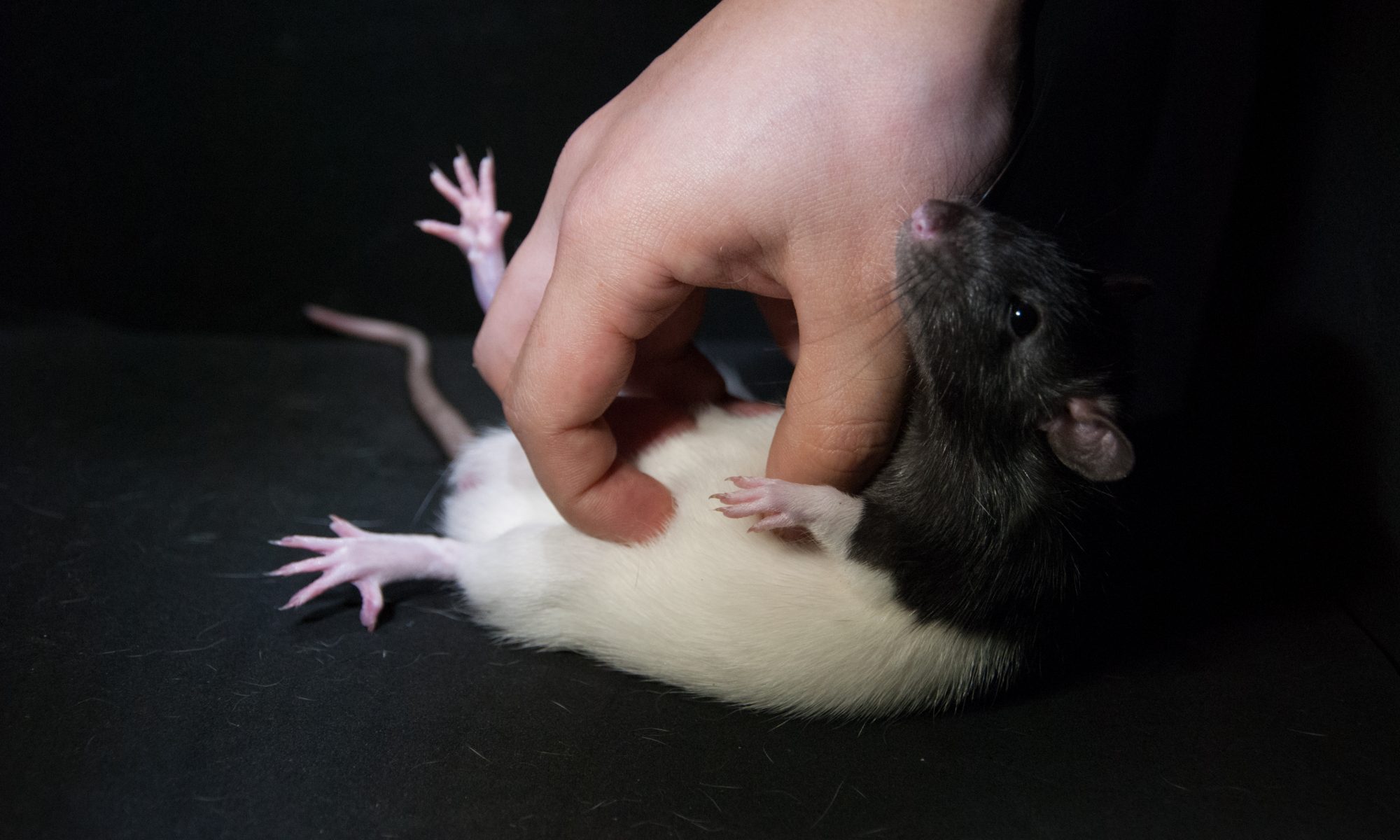
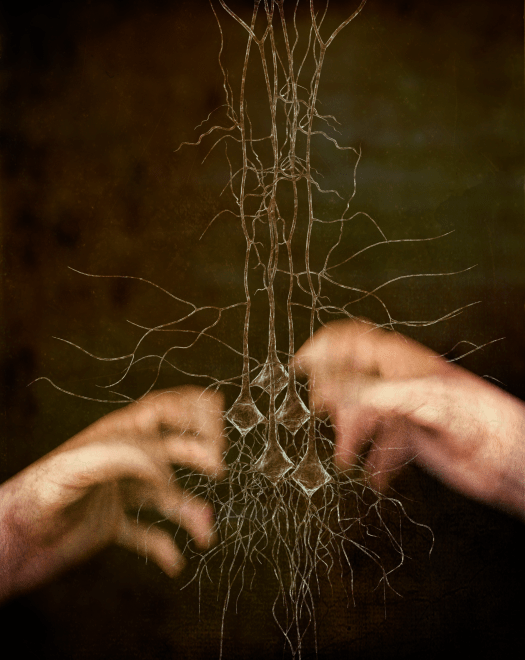
We aim to understand neuronal basis of fun and laughter. Thus, we tickle rats.
What makes something fun? Why do animals engage in playful behavior even when it serves no immediate survival need? Why does tickling cause laughter, and what does that reveal about the brain?
We investigate the neuronal basis of fun, laughter, and play. These emotionally rich, evolutionarily conserved phenomena are deeply rooted in both human and non-human animal life, yet remain underexplored in neuroscience.
While traditional research has focused on negative states such as pain, fear, and stress, we study positive emotional processes, especially those that are internally motivated and not directly tied to survival.
Our work begins with ticklishness, a unique form of social touch that evokes emotionally ambivalent responses such as laughter and withdrawal, and expands to broader questions about intrinsic motivation and emotional complexity.
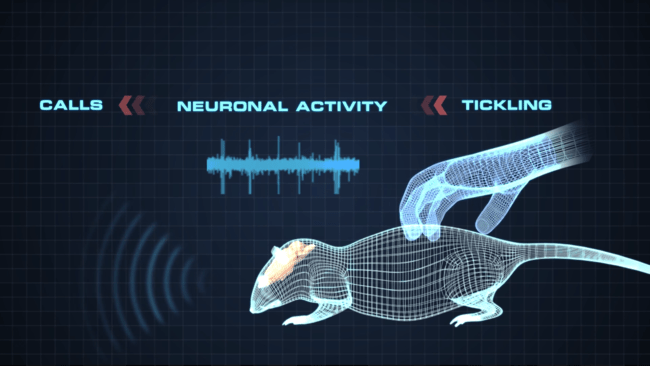

By combining neurophysiology, behavior, and comparative approaches across species, we aim to understand how the brain supports emotionally meaningful, biologically optional experiences that enrich life beyond utility.
Learn more about our Conceptual Framework, Techniques, and how we address common questions and critiques.
 Neurogelotology