Philosophical and Scientific Foundations of Studying Fun in Neuroscience
What do you mean by “emotions”?
I refer to internal brain states, likely unconscious, that respond to internal and external stimuli and give rise to emotional expressions such as behavioral, endocrinological, and physiological changes. This usage aligns with the framework proposed by Anderson & Adolphs (2014) and with LeDoux’s concept of survival circuits.
While I highly admire and fully acknowledge LeDoux’s concern that the word “emotion” may conflate functional circuits with subjective experiences, I chose to use the term operationally. I do so because the subject of our study, playfulness, is not essential for survival, making it conceptually closer to emotion than to basic survival circuits.
What do you mean by “fun”?
I define fun as an emotional-motivational brain state, most likely unconscious, that mediates play behaviors. This corresponds closely to Panksepp’s PLAY system. I use the term fun because play is typically reserved for describing the behavior itself.
Just as fear is to defensive behavior, fun is to play behavior, both being internal states inferred from observable patterns.
What about the subjective experience of fun?
Subjective experiences are, by definition, accessible only to the individual experiencing them. In both non-human animals and humans, we cannot directly measure these experiences. We infer them through behavioral and physiological indicators, and in the case of humans, also through self-report. While we incorporate self-report data in our human studies as a valuable window into subjective experience, we recognize that such reports are indirect reflections, not direct measurements.
I neither presume nor deny the existence of subjective experiences in non-human animals or in other human individuals. Our research, particularly in non-human species, focuses on objectively observable behavior, physiological responses, and neuronal activity. The subjective dimension remains beyond the reach of current empirical methods.
Isn’t this anthropomorphic nonsense?
Anthropomorphism is a legitimate concern in cross-species affective neuroscience. However, I operationally define emotions as internal, functional states, not as conscious experiences. Likewise, I define fun as the internal emotional-motivational state that mediates play.
Studying the emotional basis of play is methodologically equivalent to studying fear in defensive behavior or aggression in social conflict: none of which require access to subjective experience. Play is an ethologically established behavior, just like defense. This is a cautious, empirical stance that avoids both naive anthropomorphism and anthropodenial (as warned by de Waal).
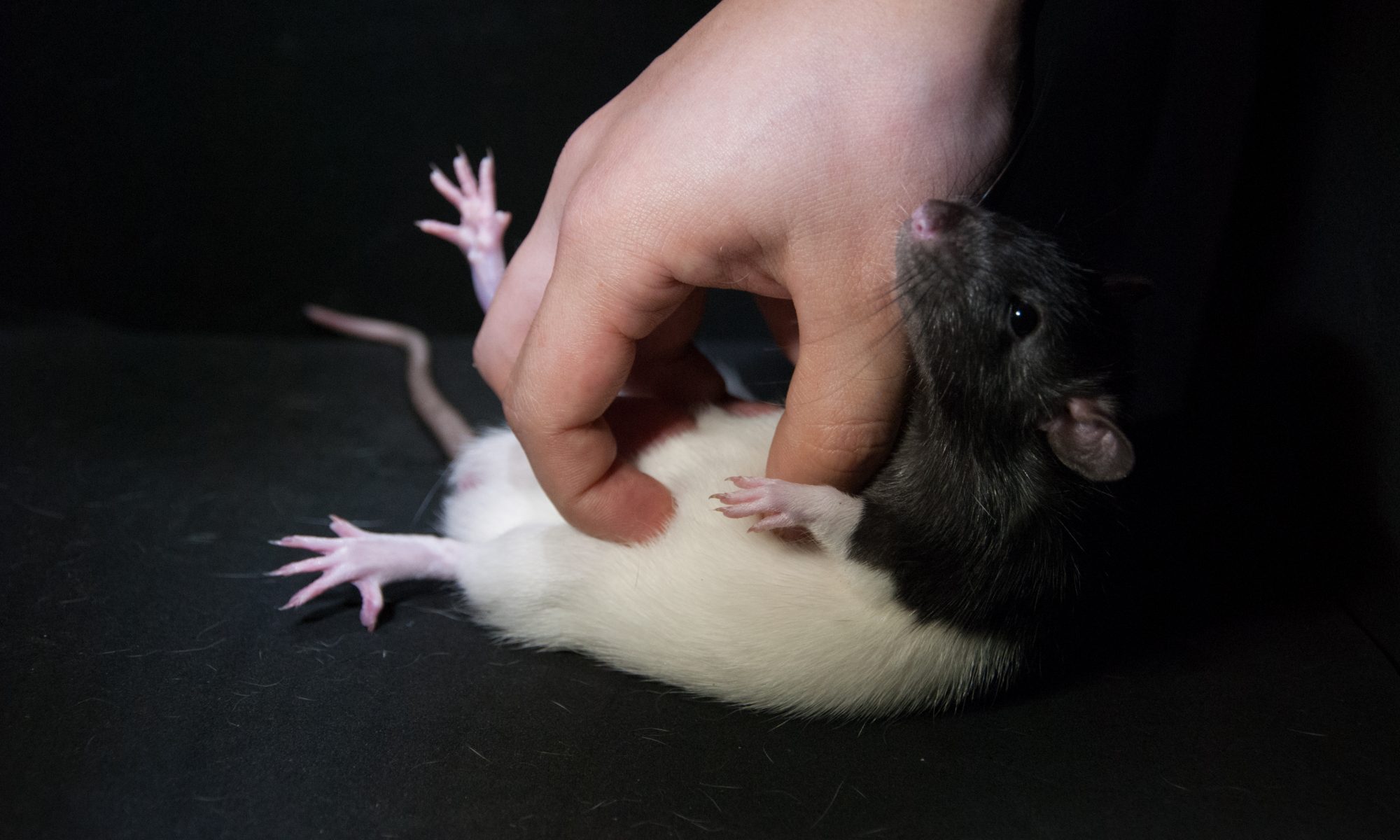
Moreover, ethological and neurophysiological similarities between humans and non-human animals, such as rats during tickling, support the use of play paradigms to investigate emotional-motivational states.
You’re claiming that studies on positive emotions are underrated, but aren’t you aware that there are already many studies on reward or mating?
Reward is a necessary and fundamental component of fun, but it is not sufficient to fully explain it. Reward refers to reinforcement, the increased likelihood of repeating a behavior based on its outcome. Fun is a higher-order emotional state that includes reward but also involves additional processes such as pleasure and arousal regulation.
Most reward-related studies focus on essential behaviors like feeding or mating. In contrast, play, by definition, is not biologically necessary for immediate survival. It is pursued voluntarily and is therefore considered biologically optional, despite its long-term developmental benefits.
If play has clear developmental or cognitive benefits, why emphasize that it’s autotelic?
The long-term developmental, cognitive, sensorimotor, and social benefits of play help explain why it has been conserved through evolution. However, these distal functions do not fully account for why individuals actively engage in play in the absence of external incentives. Play is often pursued spontaneously, without immediate utility, and sometimes even involves physical risk or energetic cost.
Emphasizing the autotelic nature of play draws attention to a deeper question: why do animals, including humans, engage in behavior that is biologically optional, non-essential for survival, and occasionally maladaptive? This question highlights the existence of emotional-motivational systems that promote engagement beyond immediate utility.
In humans, this capacity is not limited to juvenile play. Artistic creation, aesthetic obsession, and complex hobbies often reflect the same tendency to pursue activities for their own sake. Both play and the pursuit of aesthetics show signs of evolutionary elaboration, sometimes to the point of exaggeration or cost to survival. These traits suggest that the brain supports motivational structures that are not fully explained by adaptive utility alone.
Studying the neuronal basis of fun may help reveal how such systems operate. More broadly, it may offer insight into the emotional foundations of behaviors that support cognitive flexibility and a richer experiential life, even at the expense of efficiency or survival.
 Neurogelotology