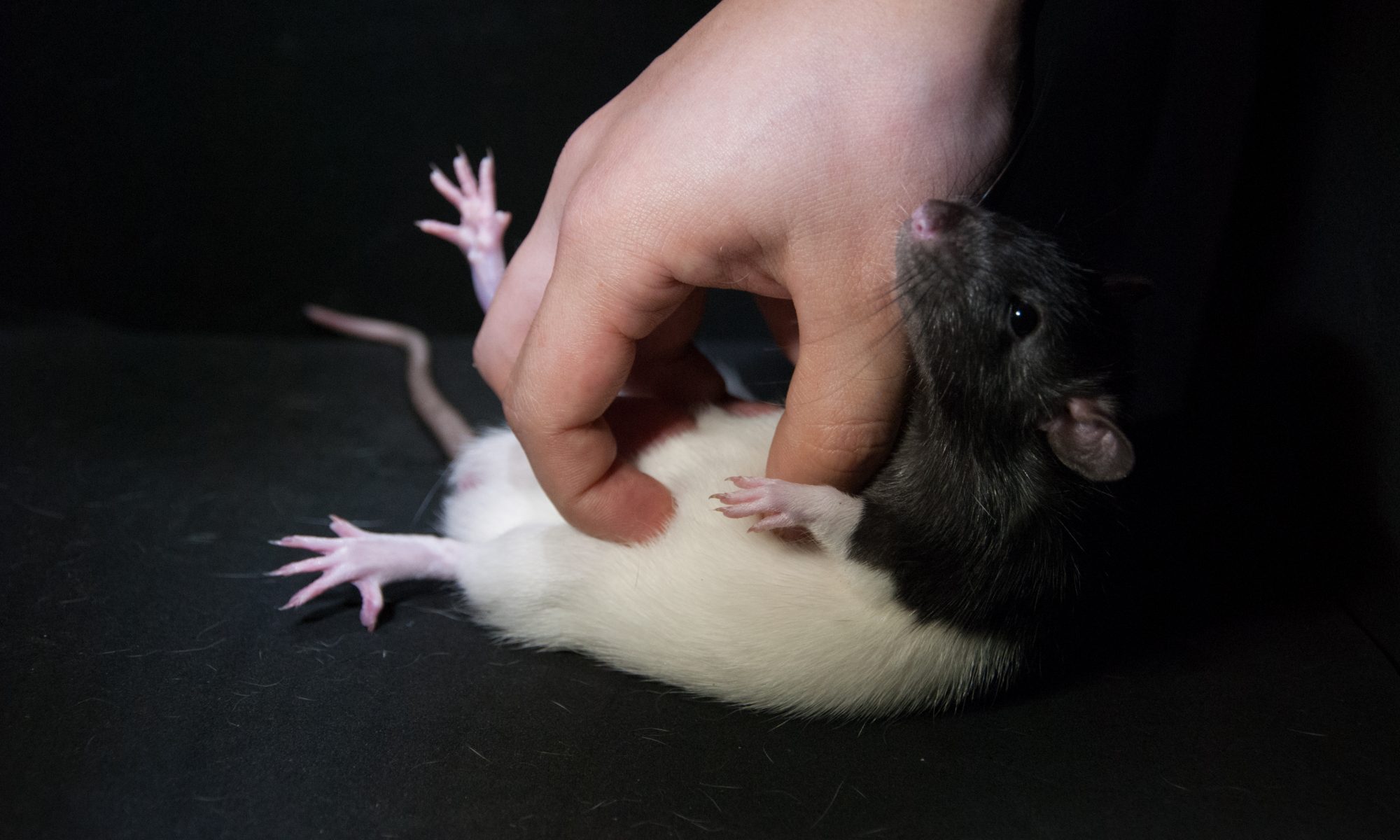

- Tame mice show human- and mouse-directed playfulness
- Hamsters reserve play for each other
- Both species alter their vocalizations depending on social context
Social play is a widespread behavior in the animal kingdom. Whether within or across species, social play helps to form bonds, practice vital skills, and express positive emotions. Yet mice, among the most widely studied animals in research, have long been thought not to play with each other or with humans.
In our new study, we show that this view is incomplete. Using a wild-derived line of mice selectively bred to approach the human hand, we demonstrate that mice can engage in playful interactions both with humans and with other mice. These tame mice emit ultrasonic “laughter”-like calls when tickled and voluntarily chase the experimenter’s hand. In encounters with other mice, they show social play including reciprocal contacts and sudden exaggerated movements, again accompanied by ultrasonic vocalizations. In contrast, unselected control mice do not respond to tickling by humans and interact less, more often displaying aggression towards other mice. Intriguingly, tame mice produce different types of calls depending on whether they are playing with humans or with fellow mice, showing that their vocalizations are context specific.

Golden hamsters, a popular pet species, tell a different story. They show little interest in human hands, but when paired with another hamster they engage in robust social play, including boxing and pinning, accompanied by frequent ultrasonic vocalizations. As with tame mice, hamster calls have distinct features depending on whether the partner is human or another hamster.
Beyond the behavioral data, these findings speak to broader questions of domestication and human–animal relationships. Selective breeding for tameness in mice not only increases human-directed playfulness but also enhances playfulness with other mice, suggesting common underlying mechanisms that promote social play regardless of partner species. Notably, genomic regions linked to tameness in mice overlap with those identified in domesticated dogs, hinting at convergent pathways of self-domestication across species. Yet both mice and hamsters also show the cognitive capacity to distinguish who they are interacting with, as reflected in their distinct vocal patterns towards humans and conspecifics.
Our study suggests that cross-species playfulness is not rigidly fixed to certain species but can emerge when animals are selected for greater openness to human contact. It also highlights how cultural views have shaped our perception of rodents. Rats are often recognized for their playfulness, while mice have rarely been seen as playful companions. By showing that wild-derived tame mice can become playful with humans as well as with their own kind, this work opens new perspectives on the biology of play and the evolutionary roots of social bonds across species.
 Neurogelotology